The Houseboats of Sausalito
Last verified September 2026
Ask most people what they picture when they hear "Sausalito" and it's this: a cluster of houseboats — some driftwood-shingled, some three stories with rooftop decks — bobbing on the still water of Richardson Bay. It's not a gimmick built for tourists. More than 400 of these floating homes are actually lived in full-time, spread across docks with names like Issaquah, Waldo Point, and Gate 5, about two miles north of downtown.
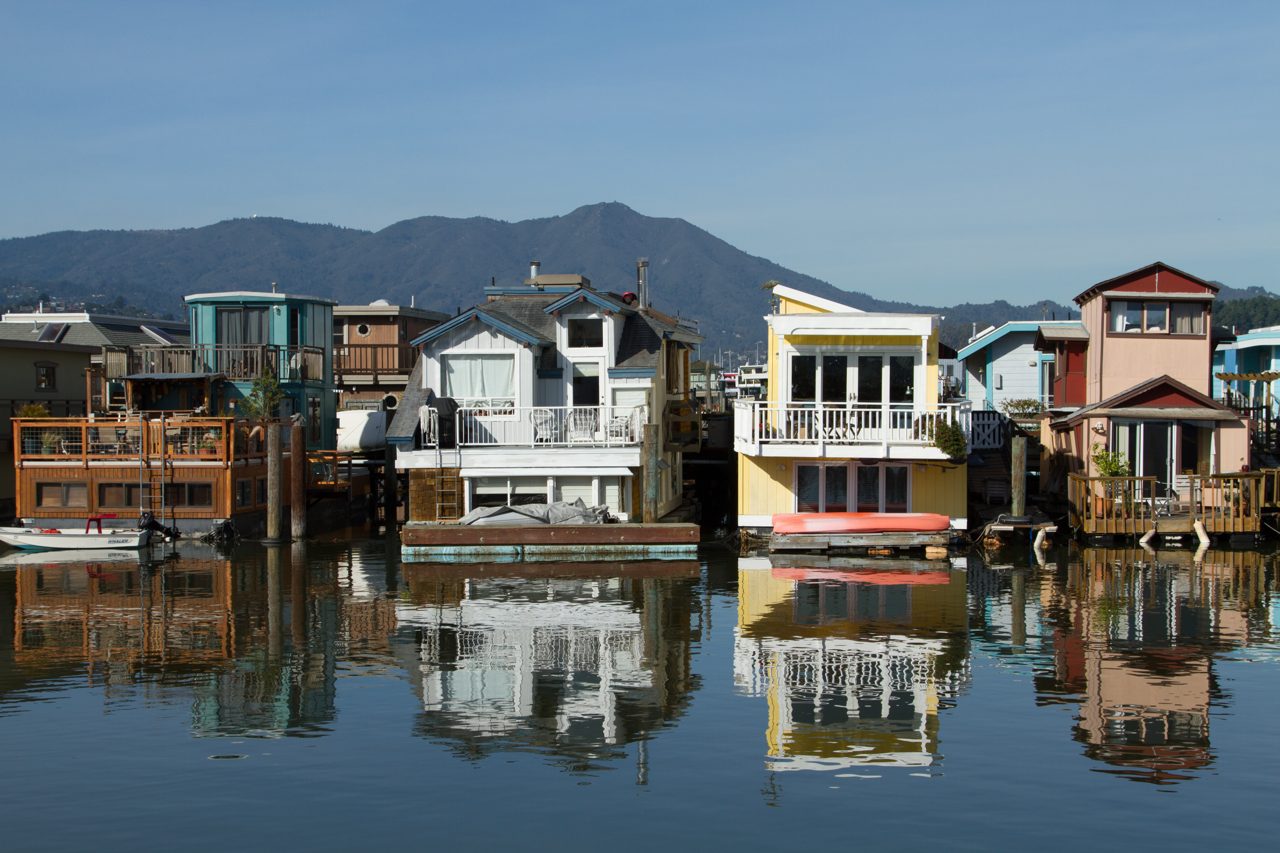
Where it came from
The community's roots go back to World War II, when the Marinship shipyard here turned out Liberty ships around the clock and workers threw together whatever floated to live on, since housing on land couldn't keep pace. After the war, artists and outcasts moved into the abandoned hulls — cheap rent, no landlord, water on three sides — and by the 1960s and '70s the docks had become a genuine bohemian holdout, complete with standoffs against the county over sewage hookups and safety codes that locals still call the "houseboat wars." Out of that fight came the rent-controlled berth leases and building standards that still govern the community today — a legal framework that's genuinely unusual in California real estate.
One odd wrinkle from that era: when Sausalito was first platted, planners assumed the shoreline would eventually be filled in and built out, so they drew and named streets that were never actually built — they're still on the books, sitting underwater beneath parts of the bay. A handful of houseboats technically float above these paper streets, which has made for some genuinely strange fights over who has the right to be there.
What's mostly gone now, and worth knowing before you visit, are the "anchor-outs" — unlicensed boats that simply dropped anchor in the open bay rather than tying up at a permitted dock, a scruffier, more improvised scene than the community covered on this page. A 2021 settlement over eelgrass habitat set a deadline of October 2026 to clear the bay of them, and the count has fallen from around 240 boats in 2016 to just a couple left as of this year. What you'll actually see today is the licensed, well-kept dock community, not a loose flotilla.
Notable neighbors
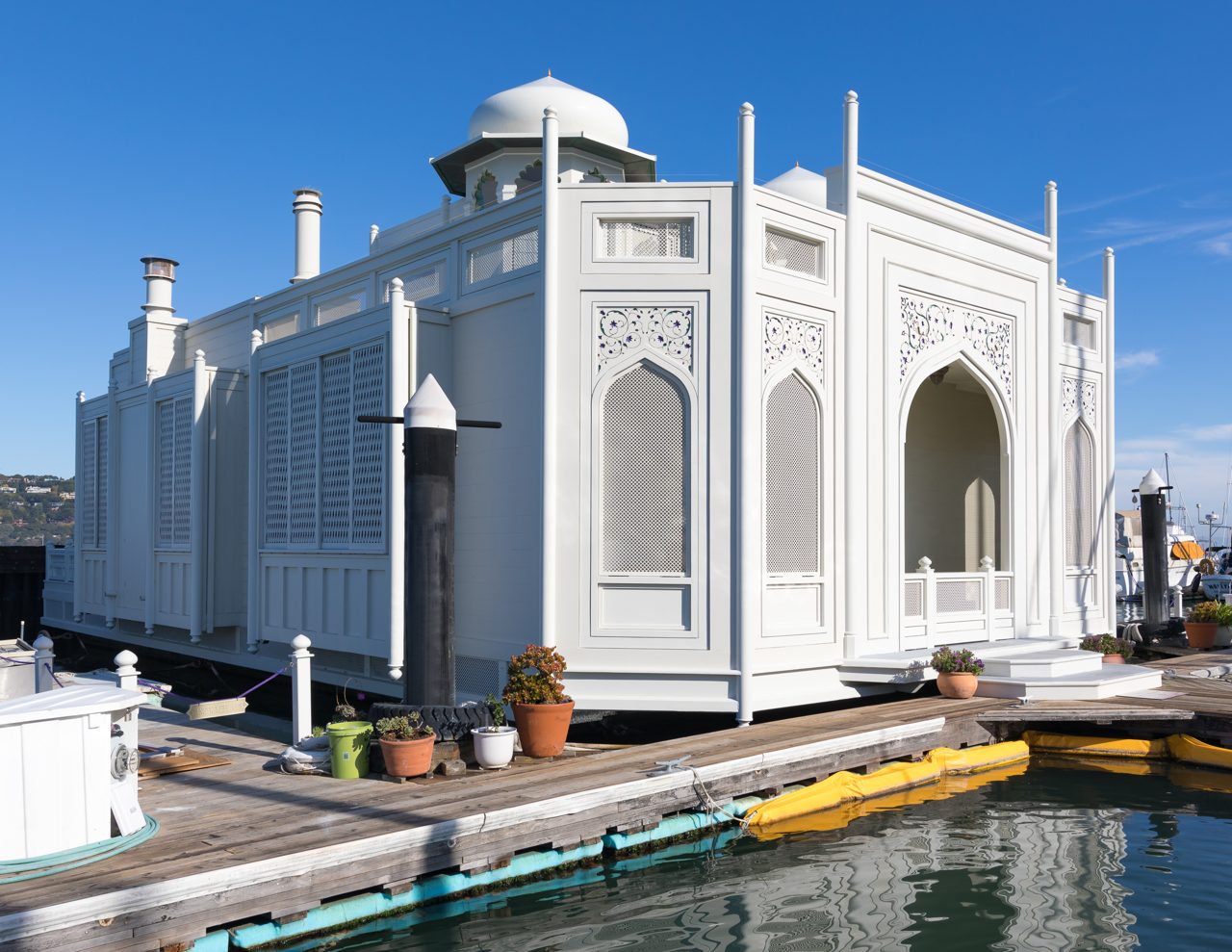
The community's bohemian reputation isn't just marketing copy. Otis Redding wrote "(Sittin' On) The Dock of the Bay" in 1967 while staying on a houseboat near Waldo Point, and actor Sterling Hayden — an accomplished sailor as well — lived aboard one of his own. Greek-French artist Jean Varda turned an old ferryboat into a floating studio and became something of a fixture of the scene. None of that history is visible from the walkway, but it's worth knowing as you look at these homes that plenty of unconventional people have called them home.
How to see it
These are private homes, not a museum. The respectful way to look is from the public walkway along Issaquah Dock, off Bridgeway near the north end of downtown — you can walk the length of it, admire the architecture, and get a genuine sense of the place without knocking on anyone's door or peering through their windows. Bring a camera for the exteriors; leave people's private decks and open doors alone. The Floating Homes Association runs small private guided tours by request that actually go inside a few homes — that's the one sanctioned way past the walkway.
Good to know
Parking near Issaquah Dock is limited residential street parking, so this is an easy add-on to a Bridgeway walk rather than a separate car trip. Give yourself twenty unhurried minutes on the dock — it's short, and the point is to look, not to power-walk it. If you're out there after dark and hear an odd, sustained hum coming off the water, that's not machinery — it's the male midshipman fish, known locally as the humming toadfish, calling for a mate. Residents have learned to live with it; visitors usually just find it strange.